Elon Musk admits: “I don't know how to make chips,” but still wants to build a giant factory himself, letting TSMC only “rent space”
Elon Musk admits he still has a great deal to learn about semiconductor manufacturing. However, he still believes his team can build, operate and improve a chip factory in an unprecedented way.
Elon Musk has just made a notable confession as Tesla, SpaceX and xAI prepare to pursue one of his most ambitious projects: manufacturing AI chips themselves.
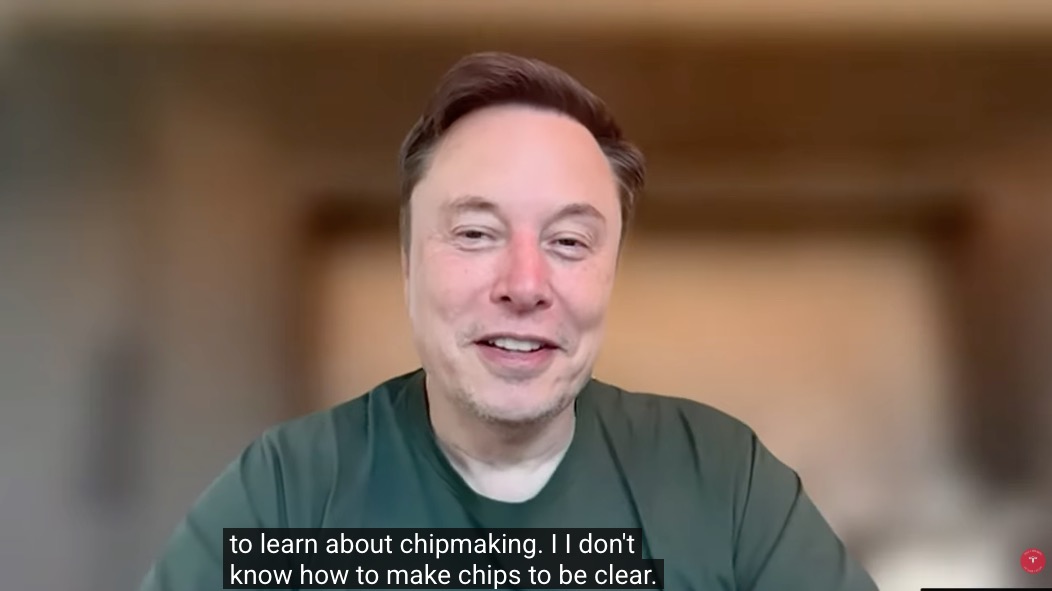
In a conversation with Tesla Owners Silicon Valley, Musk said his knowledge of the semiconductor manufacturing process is still limited.
“Frankly, I don't know how to make chips. But we will figure it out.”
Earlier, he also admitted he has “a lot to learn” about this field. Even so, the billionaire remains confident that the team behind the Terafab project can gradually solve the problems that current chipmakers are facing.
Elon Musk admits he does not know how to make chips. Photo: Tesla Owners Silicon Valley.
Starting with existing technology
Rather than declaring that he would immediately create an entirely new manufacturing process, Musk said Terafab will begin with the conventional semiconductor equipment already used in the industry.
His team will then monitor each step, identify bottlenecks and adjust the machinery to increase the number of wafers that can be processed. If existing equipment does not meet requirements, Terafab will consider developing its own specialized machines.
Elon Musk believes this approach is similar to what Tesla and SpaceX have done in cars, batteries and rockets: buy off-the-shelf equipment, find its limits, then redesign the manufacturing process.
The plan stems in part from something Musk found puzzling when visiting semiconductor factories. According to him, the facilities of Samsung, Intel and TSMC use many similar types of equipment, even though the efficiency and production capacity of each company can be very different.
Musk plans to use traditional equipment in the early stage, then improve it to increase throughput. However, he also admitted that this process could take “quite a few years,” rather than happening quickly like software projects.
Terafab is expected to use Intel's 14A process once the technology is mature enough. Tesla will be in charge of the pilot line in Texas, while SpaceX is expected to take on larger-scale production in the future.
The initial research factory was described by Musk as a project worth about 3 billion USD, capable of processing several thousand wafers per month. The goal of this facility is not immediate mass production, but to test ideas, validate processes and look for more efficient ways to make chips.
Wanting to bring the entire process into one building
One of the biggest differences in Musk's vision is putting many chip manufacturing steps under one roof. Terafab will aim to produce photomasks, make logic chips and memory, and carry out packaging and testing at the same location.
Musk once described the cycle he wants to create: “In one building, we can make photomasks, make chips, test them, and quickly move on to the next round of improvement.”
According to Musk, this model will shorten the time between design and test product. Instead of having to send wafers and components through many different factories or suppliers, engineers can adjust the design, create new masks and test the next version at the same facility.
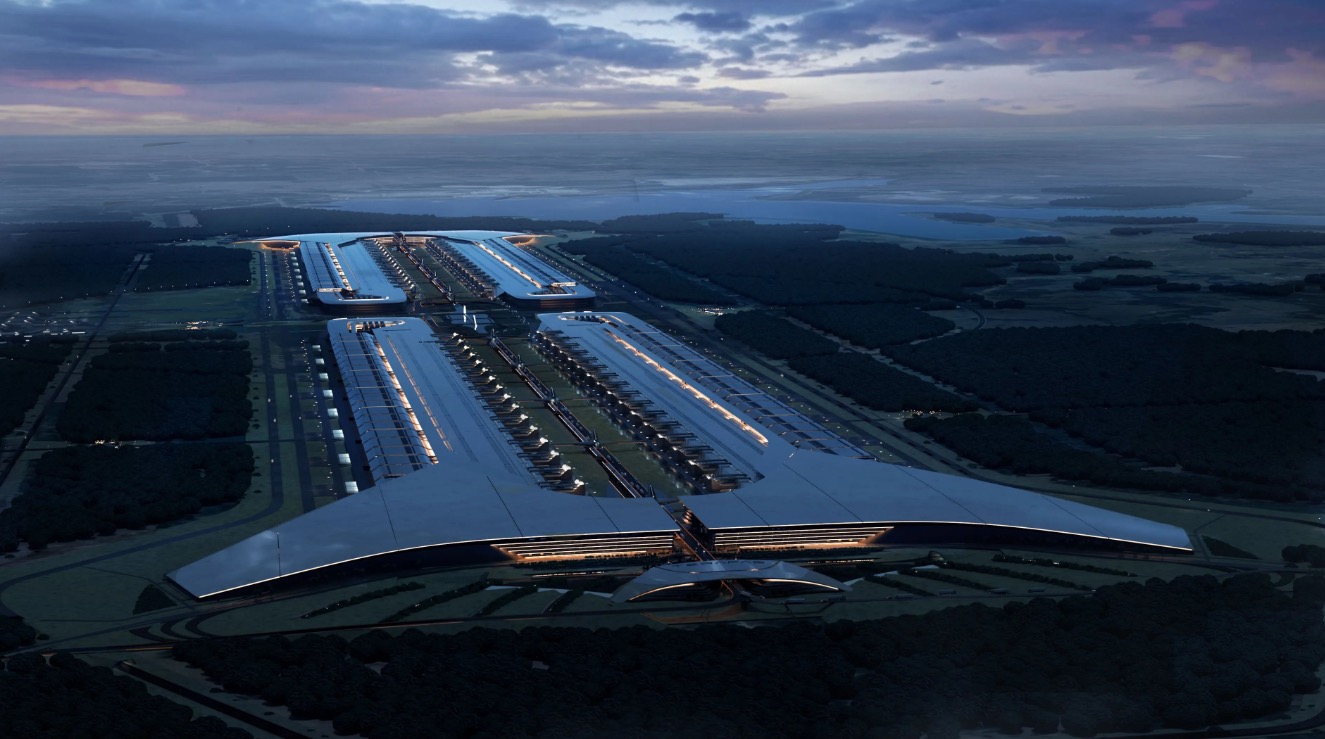
A rendering of the Terafab complex released by Elon Musk when confirming the project's construction site in Grimes County, Texas. Photo: Tesla/SpaceX.
He also affirmed that Tesla, SpaceX and xAI will directly control the project, rather than handing all manufacturing operations over to an outside partner. When reports emerged that TSMC might build and operate Terafab, Musk immediately dismissed them:
“We will build and operate the factory ourselves. There should be no doubt about that.”
Elon Musk left open the possibility that TSMC could lease part of the space in the complex, but stressed that the Taiwanese chipmaker will not hold operational control of Terafab. Intel remains the project's announced technology partner, although its specific role in bringing the 14A process into production has not been made clear.
This ambition puts him in front of a challenge very different from designing chips. Tesla has developed its own AI processors, but designing semiconductors and directly operating a manufacturing plant are two fields with very different levels of complexity.
An advanced chip factory must control thousands of steps, cleanliness, temperature, chemicals, vibration and tolerances at an extremely small scale. Owning modern equipment alone is not enough; the manufacturer must also build a stable process and raise the yield of chips meeting quality standards to a commercially viable level.
Musk's admission that he “doesn't know how to make chips” of course does not mean Terafab is certain to fail. It shows the huge gap between the project's ambition and the capabilities his team still has to build. For Musk, that does not seem to be a reason to stop, but merely the starting point of a new experiment.